


O’NEIL THOMAS: THE ART OF BEING UNBOXED & Unapologetic
Beyond the punchlines, couture, and viral moments, O’Neil Thomas is rewriting what it means to be a modern creative icon. There is an art to being unforgettable. Some master it through fashion. Others through humor, music, or the ability to command a room without saying a word. O’Neil Thomas has found a way to do all four.
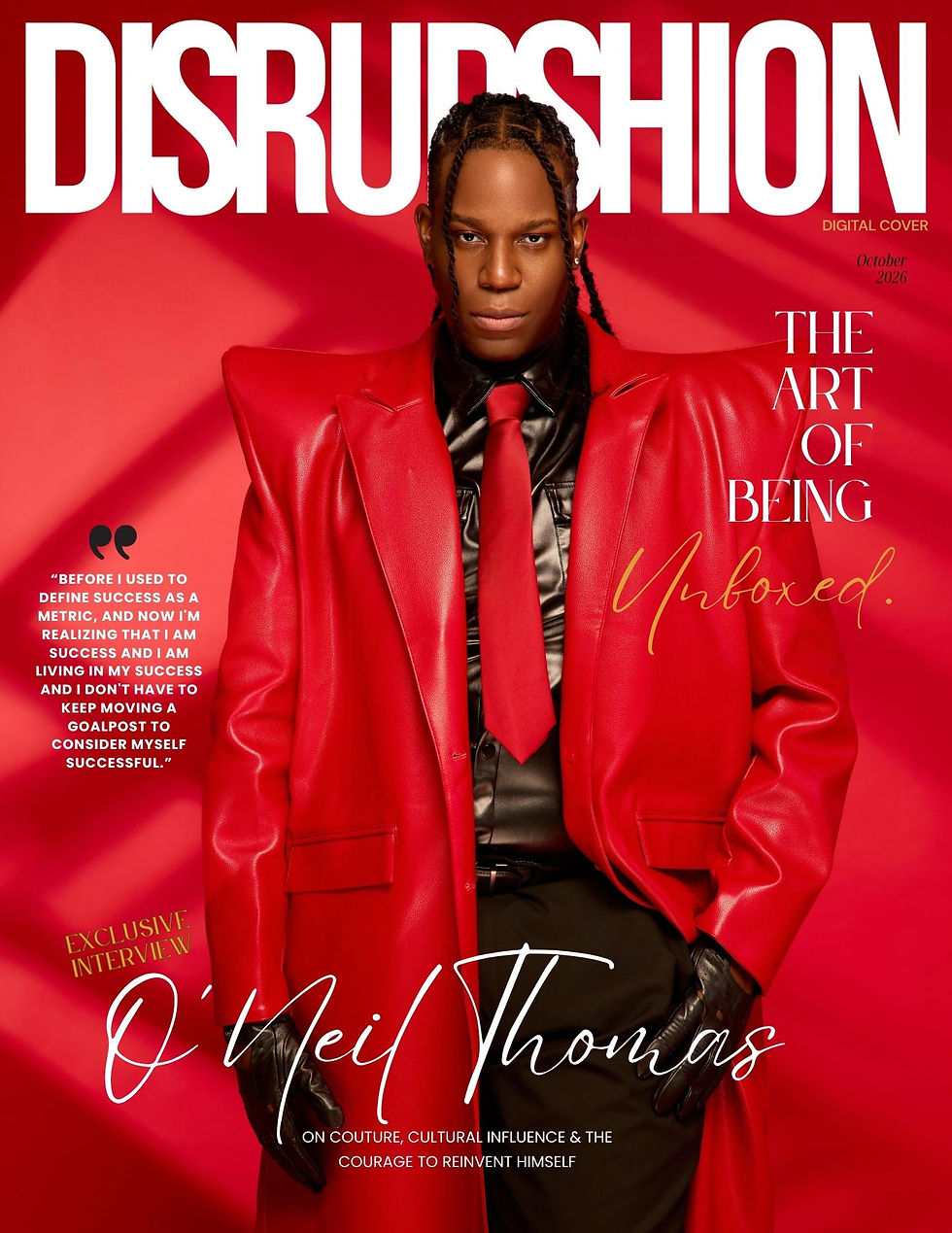
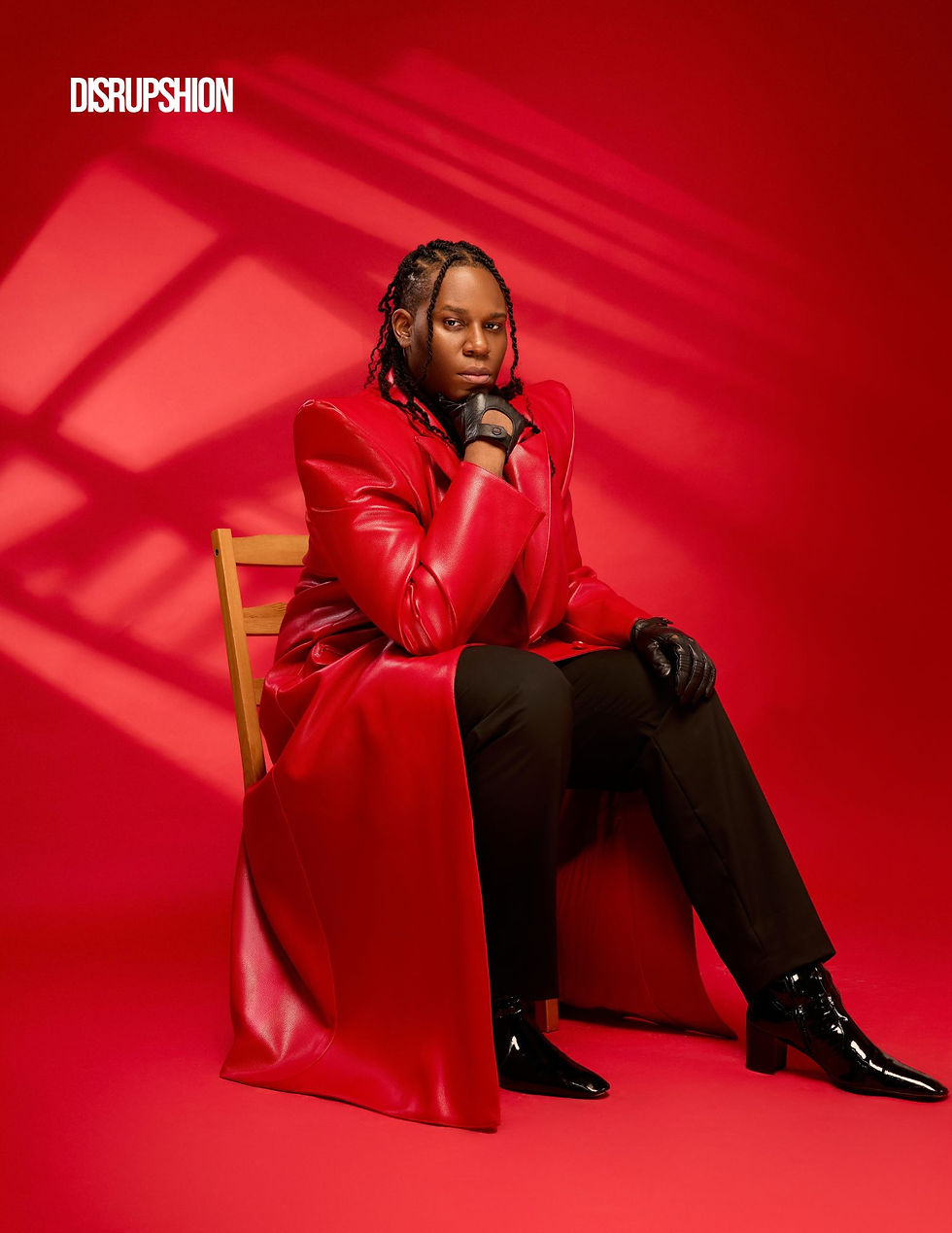
Photography By: Folajimi @f0lajimi
Words By EIC: Angel Neal @angel_stylistbehavior
Fashion Stylist: Mickey Freeman @mickeyboooom
Assistant stylist: Kris Fraser @krisfashion1
In the entertainment today, somehow along the way we’ve all become a little obsessed with categories, Thomas is proving that the most interesting creatives are often the ones who refuse to fit neatly into any of them. He is funny, unapologetically dramatic, fashion-forward, and increasingly fearless. His comedic sketches have reached millions, his cultural commentary has sparked conversations far beyond social media, and his theatrical approach to personal style has caught the attention of some of entertainment's most influential tastemakers. But beneath the couture, punchlines, and internet notoriety is something far more compelling: a storyteller learning to trust every dimension of his creativity. For Thomas, evolution has required stepping away from the very thing that made him recognizable.
“I think for me, it's so easy to use comedy as that way to welcome in new people because that's my comfort,” he tells Disrupshion. “As a creative, there are things that I am a bit more at this point in my life, I’ll be honest, scared of trying out because of the fear of it not resonating in the same way.”
That fear, however, has become less of a limitation and more of an invitation.“Being able to kind of step out of that box and allow myself just to dive in first and just see what happens, it's been one of the most rewarding things. As I push forward to reach my true potential.”
And perhaps that is where the real story begins. The internet has an interesting relationship with fame. It can turn an ordinary moment into a cultural phenomenon overnight, but it can also make it difficult for the person behind that moment to become anything else.
Thomas knows this duality intimately. Named one of Instagram's 2024 Creators of Tomorrow, the professionally trained actor and comedic creator has cultivated a devoted following through sharp observations, character-driven sketches, and an unmistakable personality.
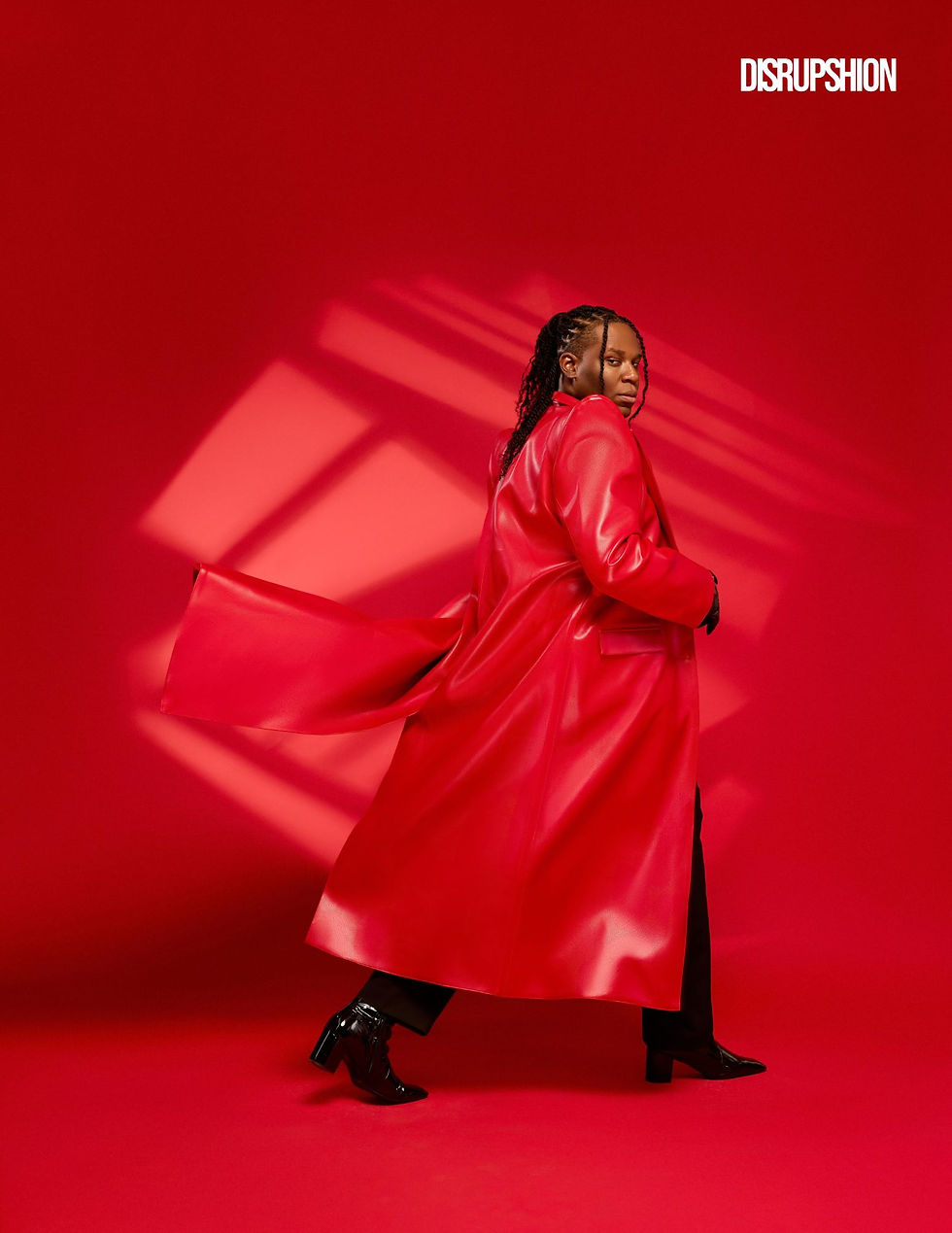
His popularity has reached the point where even a vacation is no longer entirely anonymous. During a recent trip to Jamaica, Thomas recalls being recognized by several people, only to return home to messages from others who had spotted him but were too shy to approach.
The growing visibility is exciting, but what means more to him is the audience's willingness to embrace his evolution.
“Personally, as a creative, I can't just keep seeing myself in one thing,” he explains. “I feel like we're all multi-hyphenated people. And that's not a bad thing. Do what feeds you.”
It is a deceptively simple declaration in an industry that has historically rewarded predictability. For years, traditional entertainment operated through carefully defined lanes. The actors acted. Musicians sang. Comedians made people laugh. Social media creators were often expected to remain on their platforms until someone with institutional influence deemed them worthy of something bigger. Thomas belongs to a generation challenging that arrangement. “For the longest time in old Hollywood and traditional Hollywood and spaces, we constantly had to beg to be seen. We had to beg to be considered.”
He pauses on the question that has increasingly shaped his approach to his career.
“Why am I working so hard to hopefully be seen and be at this table when I can just create my own?”
It is not simply about independence. It is about ownership of the narrative, the opportunity, and ultimately, the person he wants to become. Thomas's latest creative chapter arrives through music, with his interpretations of Labrinth's “All For Us” and “When I R.I.P.,” two emotionally charged selections from HBO's Euphoria soundtrack. For an entertainer whose audience largely associates him with comedy, the project represents a deliberate departure. The inspiration was deeply personal.
Thomas remembers discovering Labrinth through Euphoria and being struck by the way the music became an essential part of the show's storytelling. More than background accompaniment, the soundtrack carried its own emotional narrative.
He was equally moved by the artist behind it. “It was so welcoming and comforting seeing someone who looks like me, who also has a sound that is so different and so outside the norm,” Thomas shares. Labrinth's ability to turn musical individuality into an artistic strength resonated with Thomas, who had quietly been nurturing his own musical aspirations. Although he occasionally sang during livestreams with his followers, he had never presented music on this scale. Until now.
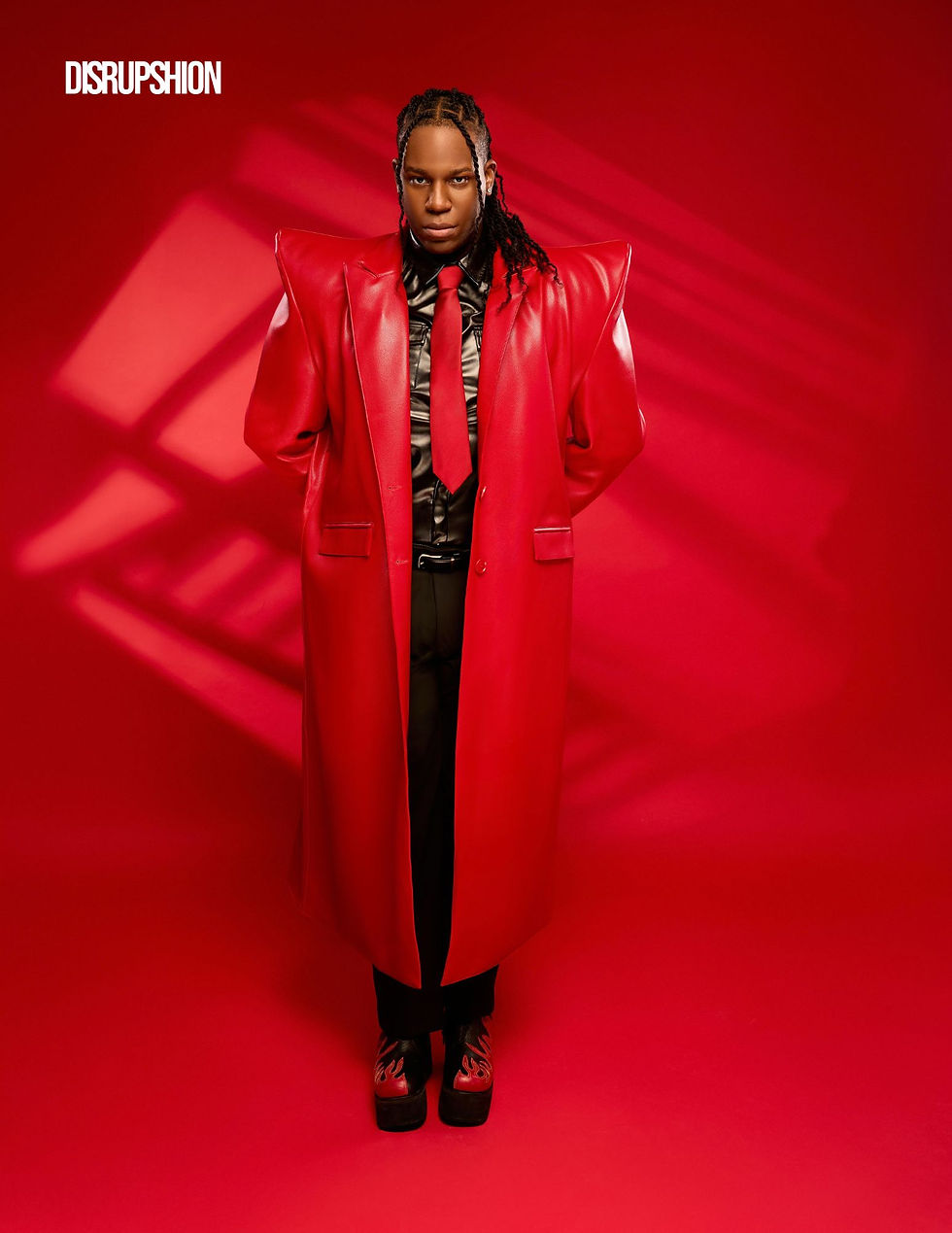
The project became both a tribute to an artist he admires and an opportunity to introduce an entirely different dimension of himself. Yet the confidence visible in the finished work tells only half the story. “I will say when I pressed post, I was freaking out,” he admits. He had planned the release carefully, even deciding on the exact time he wanted the project to go live. But no amount of preparation could eliminate the uncertainty of revealing something so personal to an audience accustomed to seeing him through another lens.
“I was nervous,” he continues. “As a creative person, we should never be comfortable. We should never feel comfortable for too long.” Rather than waiting for the fear to disappear, Thomas decided to move through it.
“If everyone hates it, then so be it. I love it, and my team loves it.”
The response was overwhelmingly encouraging, offering the reassurance he had hoped for without compromising the creative risk. And for those wondering whether music is simply a temporary experiment, Thomas makes one thing clear. “This was just step one. This was the first. This was the test. This was the feeler.” Original music is already in development, and Thomas is eager for audiences to discover his sound. The comedian is not abandoning comedy. The actor is not stepping away from acting. Instead, the artist is expanding the vocabulary through which he communicates. Of course, an O’Neil Thomas story would be incomplete without discussing the fashion. There are people who wear clothes, and then there are people who understand the transformative power of getting dressed. Thomas belongs decidedly to the latter. His style is expressive, theatrical, and frequently extravagant, embracing silhouettes and design concepts that challenge the conventions of traditional menswear. For him, fashion has always been an extension of identity.
“I kind of feel like there's alter egos with what I wear,” he says. “So I use fashion as a way just to kind of show people who I am before I even say anything.”
That philosophy reached a particularly memorable moment during Beyoncé's Cowboy Carter Tour, when Thomas collaborated with celebrity stylist Mickey Freeman on custom couture looks.
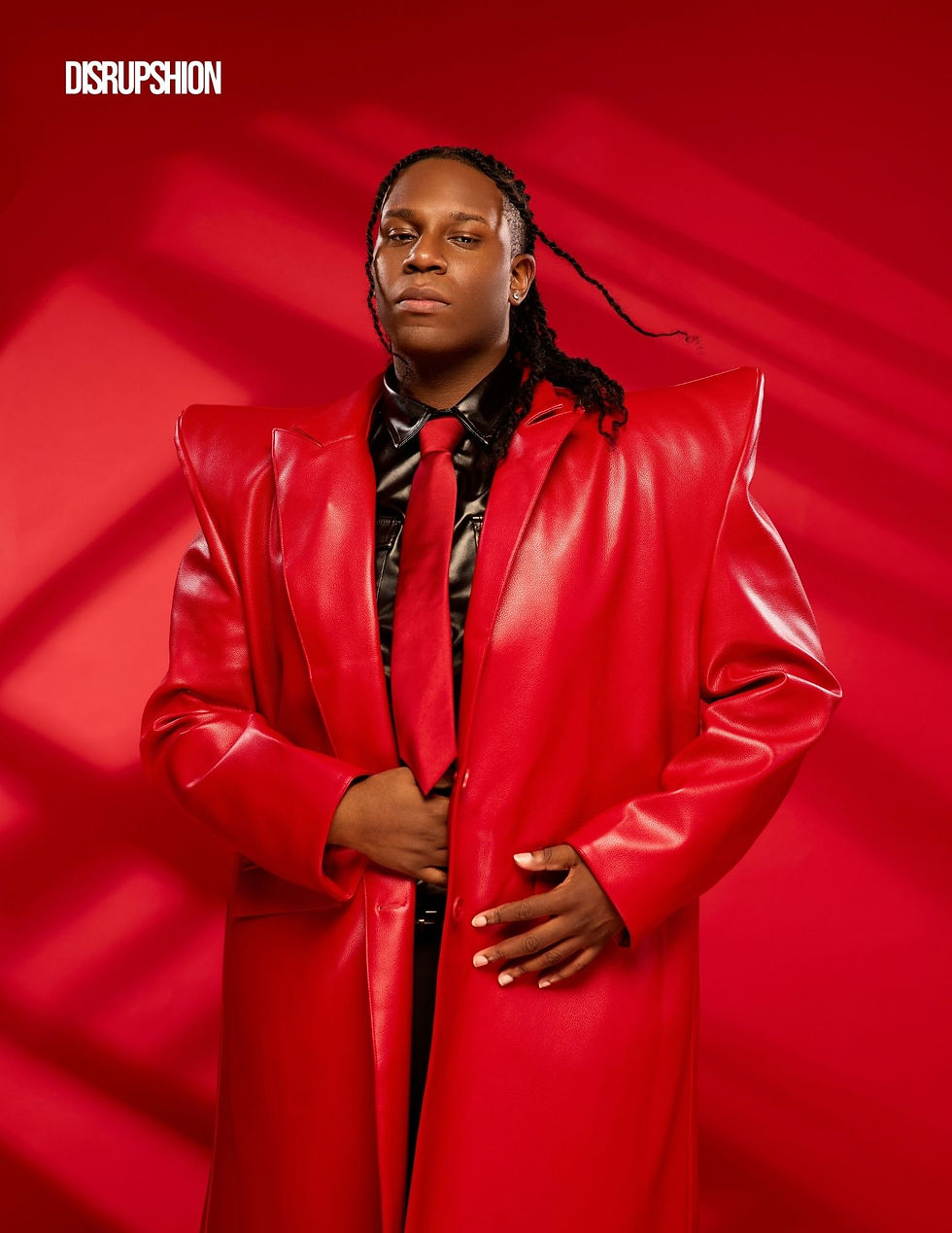
The result was a fashion statement that caught the attention of Beyoncé's team and earned Thomas recognition on the superstar's official website. For a longtime admirer of Beyoncé, the moment represented something greater than being photographed in an exceptional outfit.
“It felt like I was genuinely doing something right,” he recalls.
The recognition affirmed his belief that creativity should never be limited by expectation. Beyoncé's own artistic evolution, particularly through Cowboy Carter, had already left a lasting impression on him.
“That album made me feel so free,” Thomas explains. “She showed the whole world that you don't put me in a box. I'm not gonna put myself in a box.”
Working with Freeman only amplified that spirit. Thomas shared his vision, Freeman returned with sketches, and the creative chemistry was immediate. The experience reinforced Thomas's belief that fashion can be both spectacle and personal liberation.
His approach to style also offers a subtle rebellion against the restrictive expectations often placed on men's fashion. “I always try my best to go as theatrically as possible, as big and as avant-garde as possible,” he says. And if there is not enough room for that kind of expression? “I figured if there's not many out there who's doing it, I'll be the first.”
It is a statement that could easily serve as the thesis for his entire career. While fashion makes Thomas visible, comedy has made his voice culturally resonant. One of his most widely recognized moments came through his viral Bad Bunny content, which attracted attention from outlets including CNN, The Wall Street Journal, AP News, and People.
What began as a lighthearted video evolved into a broader conversation about language, cultural appreciation, and connection. For Thomas, the response was particularly meaningful because of the cultural climate surrounding it.
“It was during a time where humanity was constantly being questioned and threatened,” he reflects. What moved him most was not the media coverage or the viral numbers, but the way strangers came together in the comment section to celebrate the effort of understanding another culture. “I had no intention of it blowing up the way that it did, and it blew up in the most beautiful way of welcoming other cultures and appreciating other cultures as well too.”
It is an example of what Thomas does especially well: creating humor that allows people to participate in a conversation without feeling excluded from it. Still, the responsibility of having an influential voice is not without complications. In a digital culture where context can disappear in seconds and opinions are often reduced to opposing sides, Thomas has become increasingly aware of the pressure to explain, defend, or qualify every thought.
“We are living in an age of a lack of nuance,” he observes. Rather than allowing that reality to silence him, he is learning to trust his own intentions and recognize that not every disagreement requires a response. He also understands the importance of knowing when a conversation is not his to lead. It is a perspective that reflects a growing maturity in how he approaches influence, not merely as visibility, but as discernment. For all the glamorous moments and growing recognition, one of the most revealing parts of Thomas's story has little to do with fame. It begins at home. Raised by Jamaican parents, Thomas grew up witnessing the sacrifices his mother made to provide stability for him and his brother.
There was no glamorous lifestyle or guarantee that a career in entertainment would ever become a reality. What existed instead was a mother's determination to give her children the foundation they needed to dream beyond their circumstances.
“I've seen her sacrifice for me to have a normal life,” he shares.
Like many parents, particularly within immigrant households, his mother initially approached the idea of an entertainment career with understandable concern. The arts offered no obvious promise of stability, and the possibility of failure was frightening. With time, Thomas came to understand that her hesitation was rooted not in a lack of belief, but in a desire to protect him. Today, being able to give back to her is among his greatest rewards. During a recent trip to Jamaica, he brought his mother home to celebrate her birthday, a gesture that carries more meaning than any professional accolade. “It's always a blessing to be able to give back to the woman who has dedicated her life to give my brother and I just a sense of normalcy.” It is here that Thomas's definition of success begins to shift. The numbers, recognition, and opportunities are gratifying, but they are no longer the only measures of a life well lived. The ability to create freedom for the people who helped make his dreams possible has become equally important.
There is a quiet irony in building a career around being seen: the more visible someone becomes, the easier it is for the world to forget that they are human. Thomas is learning to navigate that contradiction.
Behind the elaborate productions, comedy sketches, red carpet appearances, and musical ambitions is someone who occasionally wants to do absolutely nothing.
“I’m human, y'all. I'm human,” he says with refreshing candor.“Sometimes I feel like I have to be a machine and constantly put things on it, constantly show up.”
It is an admission that feels particularly relevant in an era where creative success is often measured by consistency, output, and an almost impossible expectation of constant availability. For Thomas, staying grounded means unplugging, spending time with family and friends, and allowing himself moments that do not need to become content. He is also learning the importance of grace.
“I think we are living in this very sensitive hustle culture,” he reflects, acknowledging how easily ambition can become an endless pursuit of the next accomplishment. His advice is simple. “Give yourself grace. Give yourself grace.” It is advice he is still learning to practice himself.
Maybe that is what makes his evolution so interesting. Thomas is not merely trying to become a bigger star. He is learning how to build a bigger life without losing the parts of himself that make it meaningful. When asked what comes next, Thomas does not hesitate to dream out loud. A collaboration with Schiaparelli is high on his fashion wish list, drawn by the house's surrealist approach to couture and the imagination of creative director Daniel Roseberry. In entertainment, he hopes to expand his television and film work, with Quinta Brunson among his dream collaborators. And then there is the music. More original material. More performances. Eventually, perhaps, a tour. These are not ambitions he speaks about as distant fantasies. They are possibilities he is actively working toward. But perhaps the most powerful part of Thomas's story is not where he wants to go. It is what he has learned about getting there.
“This career that I have now is because I bet on myself, and I constantly bet on myself, and I never let no be the defining answer. It's always just a redirect.”
That belief has carried him from comedy sketches to cultural conversations, from social media fame to couture fashion moments, and now toward a musical future that is only beginning to unfold. His message to anyone standing at the edge of their own creative ambitions is equally clear.
“Never let a no be the reason why you just decide not to, because that's just one no. There's millions of other yes’es that are waiting to be seen.”
For someone who has built a career out of refusing to be confined, the sentiment feels fitting. And while Thomas continues to pursue the next opportunity, the next creative experiment, and the next version of himself, he is beginning to understand something that ambition can sometimes obscure. Success does not always exist somewhere in the future. Sometimes, it is already happening.
“Before I used to define success as a metric, and now I'm realizing that I am success and I am living in my success and I don't have to keep moving a goalpost to consider myself successful.”
It is a striking realization from someone whose career is still unfolding. Because in a world constantly demanding that creatives become more, O’Neil Thomas is discovering the freedom of being everything he already is. And that may be his most compelling performance yet.
Wardrobe Credits:
Trench Coat: Namilia
Pants: Hugo Boss
Tie: Kiton
Belt: Dolce & Gabanna
Top: MM6 Maison Margiela
Boots: Hakan Akkaya & Saint Laurent YSL
Gloves: Dents Gloves


Comments